Zotrus Technology Limited was registered and established in Shenzhen, a city known for innovation and vitality and a core city of the Greater Bay Area in China. Zotrus is a Cryptographic Application Automation Provider dedicated to making digital certificate management and cryptographic operations work automatically in real-world applications.
Digital certificates and cryptographic standards provide the foundation for digital trust. Certificate Authorities (CAs) issue certificates, standards define cryptographic protocols, and software applications use cryptographic technologies. However, these components do not automatically work together. Organizations still face challenges in connecting certificate infrastructure with applications, managing certificate lifecycles, and applying cryptographic operations in everyday workflows.
Zotrus was founded to bridge this application gap. We bring together certificate automation, cryptographic application automation, and complete ecosystem integration to help organizations deploy and operate cryptographic technologies across websites, email, chat, documents, and other applications. Our solutions support multiple cryptographic algorithms, including RSA, ECC, SM2, and hybrid post-quantum cryptography (PQC), while continuously advancing research and development in post-quantum cryptography.
1. Why Zotrus?
We Understand Both Sides. We Build Complete Ecosystems. We Make It Work.
Digital trust requires more than issuing digital certificates or developing cryptographic application software. Certificate Authorities provide certificates, while application developers integrate cryptographic capabilities into their products. Between these two sides lies a practical application gap: certificates must be obtained, managed, deployed, renewed, and used by applications; cryptographic operations must also become part of everyday business workflows rather than remain isolated technical functions.
Zotrus understands both sides. Its founder brings more than 20 years of experience in CA and PKI technologies, while Zotrus itself has accumulated more than five years of practical experience in cryptographic application automation. This combination enables us to connect expertise in certificate infrastructure with application integration. We do not simply develop isolated products; we build complete cryptographic application ecosystems that connect standards, CAs, certificates, clients, browsers, gateways, and business applications.
Most importantly, we make cryptography work in practice. From automated certificate lifecycle management to digital signing, signature verification, encryption, and decryption, Zotrus integrates cryptographic capabilities into real-world application workflows. Our ecosystem development in Certificate Transparency, S/MIME automation, SSL certificate automation, and post-quantum cryptographic applications demonstrates this approach.
2. Vision & Mission
Our Vision
To make trusted digital identities and cryptographic protection accessible, interoperable, and automatic across digital applications.
Our Mission
To bridge the gap between cryptographic infrastructure and real-world applications through continuous innovation in certificate automation, cryptographic application automation, and ecosystem integration.
We aim to help individuals and organizations adopt cryptographic technologies with lower operational complexity, greater flexibility, and stronger resilience.
3. Zero Trust Philosophy
Zotrus embraces the principles of Zero Trust: a user, connection, or device must not be trusted automatically simply because it is inside a network or has previously been authenticated. Trust must be established through identity verification, and encryption protection must be applied throughout digital interactions.
Never Trust
Do not assume that a user, device, application, or communication partner is trustworthy by default.
Always Verify
Verify digital signatures and confirm the authenticity and integrity of digital communications and transactions.
Always Encrypt
Use encryption to protect sensitive information according to the security requirements and policies of each application and communication scenario.
Digital certificates and cryptographic technologies provide important mechanisms for implementing these principles. Zotrus focuses on automating their practical application, making identity verification, digital signing, encryption, and decryption part of everyday digital workflows.
4. Technical Architecture
Zotrus builds its solutions around two closely connected automation capabilities.
Certificate Management Automation
Automate the application, validation, issuance, deployment, renewal, replacement, and full-lifecycle management of digital certificates.
Cryptographic Application Automation
Automate the use of digital certificates and cryptographic technologies within applications to perform digital signing, signature verification, encryption, and decryption.
These capabilities address different but complementary challenges. Certificate management automation ensures that applications can obtain and continuously maintain the certificates they need. Cryptographic application automation ensures that certificates and cryptographic operations are genuinely integrated into application workflows.
Through an integrated architecture, Zotrus connects these capabilities with CA systems, certificate management services, cryptographic components, application clients, browsers, and gateways. This architecture supports both individual application needs and enterprise deployments.
Applications and services are the user-facing forms of cryptographic automation. Gateways provide an enterprise deployment path for integrating these capabilities with existing infrastructure and business systems.
5. Six Strategic Capabilities
Zotrus develops six complementary capabilities to build practical, flexible, and resilient cryptographic application ecosystems.
Certificate Management Automation
Automate digital certificate applications, domain and identity validation, issuance, deployment, renewal, replacement, and lifecycle management. Certificate automation reduces manual operations and helps organizations continuously maintain the certificates required by their applications.
Cryptographic Application Automation
Automate cryptographic operations in real-world applications, including digital signing, signature verification, encryption, and decryption. By integrating these operations into email, websites, chat, documents, and other application workflows, Zotrus makes cryptography practical and accessible.
Complete Ecosystem Integration
Connect standards, CAs, certificates, clients, browsers, gateways, and applications into complete, operational ecosystems. Rather than treating components as isolated products or technologies, Zotrus focuses on making the entire technology chain work together.
Cryptographic Agility
Enable applications and infrastructure to adapt to changing cryptographic requirements. Through client software and gateway capabilities, Zotrus works toward automated algorithm selection, adaptation, switching, and upgrading according to application requirements and communication partners’ capabilities. This supports evolution from RSA and other traditional algorithms toward SM2, post-quantum cryptography, and hybrid cryptographic schemes.
Multi-CA Resilience
Reduce dependence on a single CA by integrating multiple CA services. Zotrus has connected with multiple Certificate Authorities, including international CAs and CAs in China. Multi-CA integration provides greater flexibility in certificate sourcing and helps reduce operational risks associated with reliance on a single CA.
Cryptographic Resilience
Maintain cryptographic diversity rather than depending on a single algorithm or technology path. No traditional algorithm or post-quantum approach should be assumed to be the only long-term answer. Supporting multiple traditional algorithms, post-quantum algorithms, and hybrid schemes helps organizations retain options as standards, security assessments, and application requirements evolve. Cryptographic agility addresses how algorithms change and adapt; cryptographic resilience ensures that alternatives are available when change becomes necessary.
6. Four Cryptographic Ecosystems
Zotrus builds complete cryptographic application ecosystems supporting multiple algorithms, including widely deployed RSA/ECC algorithms and SM2, an internationally standardized cryptographic algorithm.
Our approach goes beyond certificate management automation. We combine certificate lifecycle management with cryptographic application automation so that digital certificates and cryptographic operations work together in real-world applications. Across our products and solutions, we support certificate automation and cryptographic application automation in both RSA/ECC and SM2 environments. Supporting multiple algorithms and their corresponding ecosystems helps users maintain interoperability, flexibility, and cryptographic diversity without depending on a single algorithm or technology path.
Our ecosystem initiatives demonstrate how standards and individual technical components can be brought together as complete, practical solutions.
Certificate Transparency Ecosystem
Certificate Transparency (CT) is an important mechanism for improving the transparency and auditability of SSL certificate issuance. A complete CT ecosystem requires more than CT log services: CA systems must be able to issue SSL certificates containing Signed Certificate Timestamps (SCTs), and browsers must support checking and validating CT information.
Zotrus has developed an SM2 Certificate Transparency ecosystem comprising:
- SM2 Certificate Transparency log infrastructure.
- Three SM2 CT log services operated by Zotrus.
- A Zotrus CA system that supports SM2 Certificate Transparency.
- SM2 SSL certificates supporting Certificate Transparency and issued by the Zotrus CA system.
- ZT Browser support for SM2 Certificate Transparency.
This ecosystem complements the established RSA-based Certificate Transparency environment and helps extend CT mechanisms to SM2 SSL certificate applications.
ZTmail Cryptographic Application Automation Ecosystem
S/MIME provides standardized mechanisms for digitally signing and encrypting email. However, broad practical adoption requires more than the ability to issue S/MIME certificates. Certificates must be obtained and managed, and email applications must use them correctly in everyday communication workflows.
Zotrus brings together relevant standards, CA capabilities, certificate automation services, email applications, and enterprise integration technologies to build a complete ZTmail cryptographic application automation ecosystem. Our work is based on the broader S/MIME standards framework, including RFC 8823, as well as certificate automation technologies such as ACME. Through ZTmail App, ZTmail Chat, ZTmail Sign, and ZTmail Gateway, Zotrus integrates certificate management and cryptographic operations into email, chat, and document workflows. The ecosystem supports RSA and SM2 certificate environments, helping individuals and organizations apply digital identities, signatures, and encryption to email, chat, and documents with less manual effort.
The ecosystem includes:
- ZTmail ACME service system.
- Zotrus CA system issuing SM2 S/MIME certificates and document certificates.
- ZTmail App.
- ZTmail Email cryptographic application automation service.
- ZTmail Chat cryptographic application automation service.
- ZTmail Sign cryptographic application automation service.
- ZTmail cryptographic application automation gateway.
This ecosystem has delivered the world’s first and, to date, only implemented application of the RFC 8823 standard. It automates both S/MIME certificate management and document certificate management, and supports both RSA and SM2 algorithms.
SSL Certificate Automation Application Ecosystem
SSL certificates are the foundation of HTTPS encryption and a core component of website security. However, the ability to issue certificates does not mean certificate management is automated; likewise, automated certificate management alone does not mean HTTPS encryption is automated. A practical SSL certificate automation ecosystem requires standards and protocols, CA support, ACME clients, deployment infrastructure, and integration with web servers and cloud platforms.
Zotrus provides SSL certificate and HTTPS encryption automation for RSA/ECC and SM2 environments. The ecosystem includes:
- SM2 ACME Service supporting automated management of both RSA and SM2 SSL certificates.
- Zotrus CA System issuing RSA and SM2 SSL certificates.
- ZT Browser supporting RSA and SM2 SSL certificates.
- SM2cerBot, an open-source SM2 ACME client that supports automated management of both RSA and SM2 SSL certificates.
- ACME client path: install an ACME client on the web server to automate certificate application, validation, installation, and renewal.
- HTTPS automation gateway path: deploy an on-premises gateway to automate dual-algorithm SSL certificate management and deployment, and to provide adaptive multi-algorithm HTTPS encryption without installing an ACME client on every web server.
- ACME cloud service path: automate SSL certificate management and HTTPS encryption without installing an ACME client on web servers or deploying a local hardware gateway.
- Multi-CA integration: connect multiple CAs to provide greater flexibility in certificate sourcing and management and reduce single-CA dependency.
- Cryptographic adaptation: support multiple cryptographic algorithms and evolving hybrid cryptographic technologies in applicable deployment scenarios.
By providing three deployment paths: ACME client, cloud service, and hardware gateway, Zotrus helps users automate SSL certificate management and HTTPS encryption across different infrastructure environments.
Post-Quantum Cryptographic Application Automation Ecosystem
Migration to post-quantum cryptography requires more than new algorithms. It requires coordinated development of certificates, PKI systems, applications, browsers, gateways, and supporting infrastructure. Zotrus is actively advancing post-quantum cryptographic application technologies.
One implemented capability is SM2MLKEM768, a hybrid key-encapsulation scheme combining the traditional SM2 key-exchange mechanism with the ML-KEM-768 post-quantum key-encapsulation mechanism. IANA has assigned protocol code point 4590 to this scheme. For applicable communication scenarios, this hybrid approach combines traditional and post-quantum key-establishment mechanisms. Zotrus was the first globally to support both hybrid PQC algorithm X25519MLKEM768 and hybrid PQC algorithm SM2MLKEM768.
- Implemented Capabilities
- ZT Browser supports SM2MLKEM768.
- Zotrus HTTPS Automation Gateway supports SM2MLKEM768.
- Research and Development
- Root CA certificates and CA systems based on post-quantum algorithms.
- Post-quantum SSL certificates, S/MIME certificates, Document certificates, Code signing certificates, Client certificates.
- ZT Browser support for post-quantum SSL certificates.
- Zotrus HTTPS Automation Gateway support for post-quantum SSL certificates.
- Post-quantum Certificate Transparency log systems.
- ACME service systems for post-quantum certificates.
- Research into MTC certificates.
Zotrus is committed to exploring multiple post-quantum algorithms and hybrid schemes, and to implementing PQC certificate automation and automated cryptographic applications in HTTPS security, email security, and document security.
7. Cryptographic Agility & Cryptographic Resilience
Cryptographic technologies continue to evolve. New algorithms, standards, security assessments, and application requirements will continue to shape how digital trust is established and maintained. Zotrus believes that long-term cryptographic security requires both agility and resilience.
Cryptographic Agility
The ability to adapt: when requirements change, applications and infrastructure should be able to select, switch, and upgrade cryptographic algorithms.
Cryptographic Resilience
The ability to preserve alternatives: systems should support multiple algorithms and cryptographic approaches rather than depend on a single technology path.
Multi-CA Resilience
Addresses a different dependency: integrating multiple CAs to reduce reliance on a single certificate supplier.
Together, these capabilities help users prepare for changing cryptographic requirements while preserving flexibility and operational continuity. Our work spans RSA, ECC, SM2, post-quantum algorithms, and hybrid cryptographic schemes. We continue to develop the infrastructure and application capabilities needed to support this evolution.
8. Standards & Industry Contributions
Standards provide the technical foundation for interoperability, security, and consistent implementation. They deliver practical value only when implemented across a complete application ecosystem. Zotrus leads the development of two Chinese cryptographic standards, follows the evolution of relevant cryptographic standards and technologies, and participates in their practical implementation and deployment.
Certificate Transparency
Developing CT infrastructure and application support, advancing SM2 Certificate Transparency while working alongside established CT mechanisms.
S/MIME Certificate Automation and Applications
Applying international and Chinese S/MIME standards and certificate automation technologies to make certificate-based email security easier to deploy and use.
SSL Certificates and HTTPS Automation
Using ACME-based automation to simplify SSL certificate lifecycle management and HTTPS deployment across different infrastructure environments.
Post-Quantum Cryptography
Researching and implementing hybrid cryptographic technologies, including SM2MLKEM768, while advancing post-quantum certificate and application ecosystems.
Cryptographic Interoperability
Supporting multiple algorithms and standards to help different cryptographic technologies work together in practical application scenarios.
Our objective is not simply to develop or implement individual standards, but to connect them into complete, interoperable cryptographic solutions.
9. Our Journey & Achievements
From PKI Expertise to Cryptographic Application Automation
Zotrus was established with a focus on making digital certificate management and cryptographic applications more automatic and practical.
Zotrus developed certificate automation technologies and integrated with multiple Certificate Authorities, laying the foundation for multi-CA certificate management.
Zotrus extended certificate automation into email security, integrating certificate management with application-level signing, signature verification, encryption, and decryption.
Zotrus developed SM2 CT log infrastructure, operates three SM2 CT log services, and advanced the integration of SM2 CT support across CA systems, SSL certificates, and browsers.
Zotrus developed and open-sourced the SM2 ACME client SM2cerBot and developed HTTPS encryption automation solutions, offering three deployment approaches: ACME client, ACME cloud service, and ACME hardware gateway.
Zotrus implemented support for the Chinese hybrid PQC algorithm SM2MLKEM768 and the international hybrid PQC algorithm X25519MLKEM768 in ZT Browser and Zotrus HTTPS Automation Gateway, while continuing research and development on post-quantum certificates and supporting infrastructure.
Today, Zotrus continues to expand its cryptographic application automation ecosystems and global partnerships.
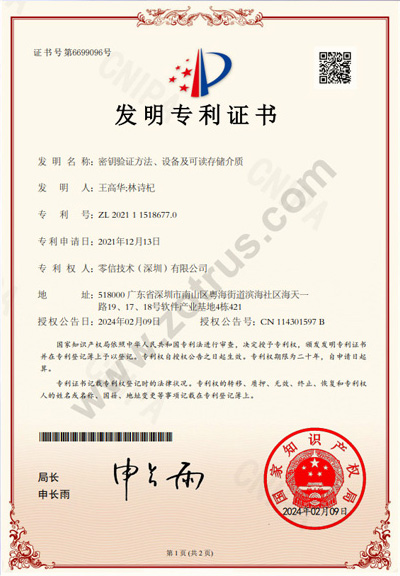
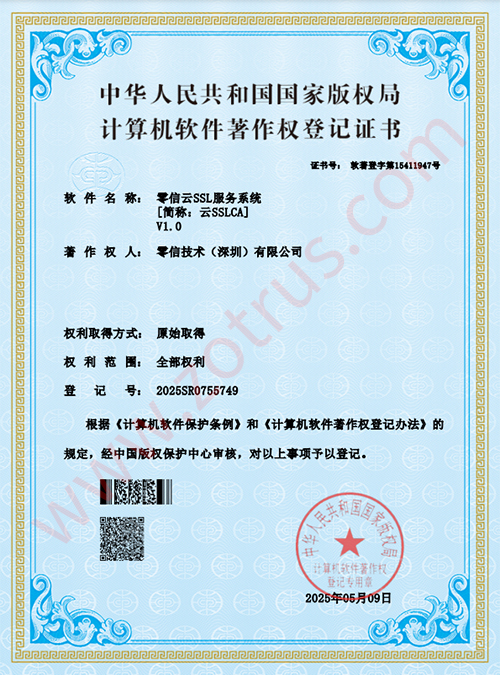
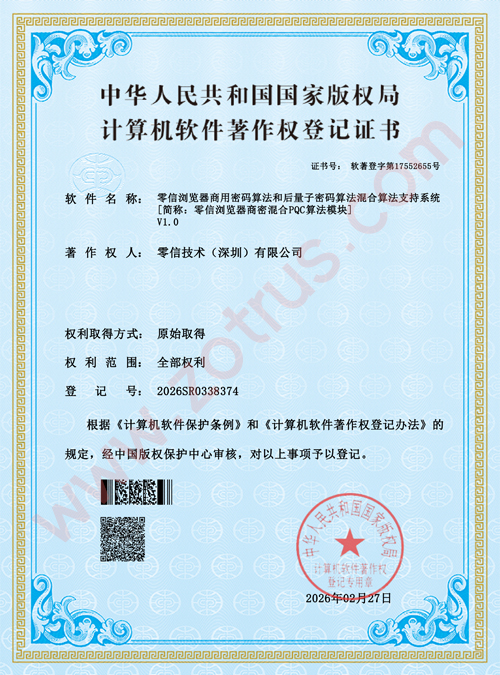
China Invention Patent Certificate and China Computer Software Copyright Registration Certificate



10. Founder & Leadership
The founder of Zotrus has more than 20 years of experience in Certificate Authority (CA) and Public Key Infrastructure (PKI) technologies, together with more than five years of experience in research and development of certificate application automation. This background provides deep insight into certificate issuance, digital identity, PKI architecture, cryptographic standards, and the operational challenges organizations face when adopting digital certificates.
Zotrus was founded on the recognition that issuing certificates is only part of the challenge. Digital trust creates real value only when certificate management and cryptographic technologies are integrated into the applications people use every day. This experience continues to shape Zotrus’s technology strategy: connecting CA infrastructure with application requirements, building complete ecosystems, and making cryptography work automatically in practice.
Zotrus founder Richard Wang is the founder and former CEO and CTO of WoTrus CA and MeSign. After the company was acquired by 360 Group, he embarked on a new entrepreneurial journey to continue innovating in the cryptographic application field and bring that unfinished mission forward.
Read the CEO’s remarks in the company launch announcement; explore the CEO Blog.
11. Global Ecosystem & Partnerships
Building an Open, Interoperable Cryptographic Application Ecosystem
Cryptographic application automation cannot be achieved by one company or one product alone. It requires cooperation among Certificate Authorities, browser developers, email clients, cloud platforms, chat providers, document providers, and other technology partners. Zotrus is committed to building an open and interoperable ecosystem that connects these participants through standards, technology integration, and practical application solutions.
Certificate Authority Partnerships
Zotrus has integrated with multiple international CAs and CAs in China. The four cryptographic ecosystems integrate certificate automation support from multiple CAs, providing greater flexibility for organizations that need to manage certificates from different providers. Through multi-CA integration, Zotrus aims to reduce dependence on a single certificate supply channel and improve the flexibility and resilience of certificate management.
SSL Certificates & HTTPS Infrastructure
SSL certificates and HTTPS are important components of the global cryptographic application ecosystem. Zotrus works with CAs and infrastructure providers to support automated SSL certificate management and HTTPS deployment in different environments. Our solutions cover RSA/ECC and SM2 certificate automation, ACME-based cloud services, open-source ACME client technology, and HTTPS Automation Gateway deployment. This connects certificate issuance with the actual operation of HTTPS on web servers and across infrastructure environments.
Hybrid Trust, Combining Global Trust with Zotrus Trust
A complete cryptographic application ecosystem requires both application automation and trusted identity infrastructure. Zotrus operates its own CA system (Zotrus CA) as part of its broader Zotrus Trust framework.
Through Hybrid Trust, Zotrus combines Global Trust and Zotrus Trust, enabling globally trusted certificates and certificates issued under Zotrus Trust to work together in applicable scenarios. This approach addresses different trust requirements, including interoperability with established global trust environments and the use of Zotrus’s own trust infrastructure. Zotrus integrates its CA and trust capabilities into the four cryptographic ecosystems, connecting trusted identities with certificate automation and cryptographic application automation.
Browser Ecosystem
Browsers play an important role in certificate validation, secure connection establishment, and support for emerging cryptographic technologies. Through ZT Browser and its Trusted Root Program, Zotrus advances browser support for SM2 Certificate Transparency and hybrid cryptographic technologies such as SM2MLKEM768. Browser trust systems and cryptographic integration are important to making standards work in real-world applications.
Email Client Ecosystem
Email clients are essential to the practical adoption of S/MIME. ZTmail App integrates certificate automation and cryptographic application capabilities into email workflows, helping users digitally sign, verify, encrypt, and decrypt messages without treating cryptographic operations as separate technical tasks. Welcome global CAs to join the ZTmail Trusted Root Program and work together to promote the widespread use of S/MIME certificates worldwide.
Cloud Platform Ecosystem
Cloud platforms provide important infrastructure for digital services and certificate management. Zotrus works to connect certificate automation and cryptographic capabilities with cloud infrastructure and services, supporting scalable deployment and integration.
Chat Provider Ecosystem
Chat applications are increasingly important channels for business and personal communication. Zotrus explores ways to address the current fragmentation of global chat services. By leveraging the global email infrastructure, we aim to bring trusted identities and cryptographic protection into chat workflows, extending certificate-based trust from email to chat.
Document Provider Ecosystem
Digital documents are exchanged, signed, and managed across business platforms. Zotrus focuses on integrating document signing, signature verification, encryption, and identity trust into document workflows, including workflows connected with email and local document applications. Welcome global CAs to join the ZTsign Trusted Root Program and work together to promote the widespread use of document certificates worldwide.
Building a Global, Interoperable Ecosystem
Our ecosystem strategy is built on collaboration rather than isolated development. By connecting CAs, browsers, email clients, cloud platforms, chat providers, and document providers, Zotrus positions itself as a cryptographic application automation provider, making cryptographic technologies more interoperable and easier to adopt.
We believe the future of digital trust depends not only on stronger cryptographic algorithms, but also on the ability to automate their management and application across the systems and software that individuals and organizations rely on every day.
Automate Certificate Management. Automate Cryptography in Applications.
Cryptography for Trust. Automation for Security. AI for Productivity.